
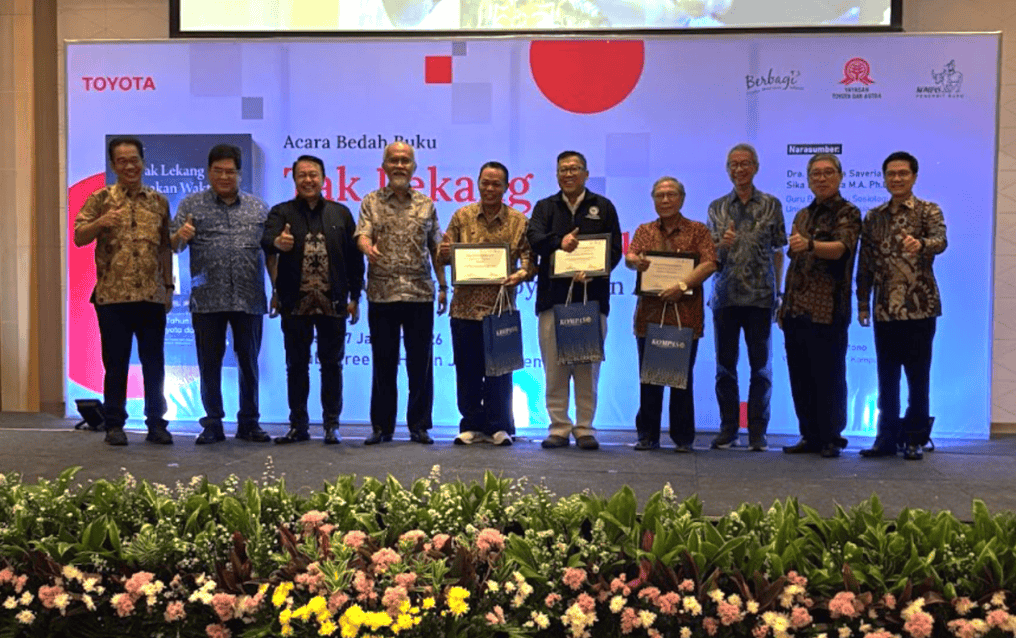
Jakarta, January 27, 2026 – In commemoration of the 50-year journey of the Toyota Astra Foundation (YTA), a book discussion titled “50 Years of the Toyota Astra Foundation: Timeless Legacy” was held, highlighting the foundation’s contributions and initiatives since its establishment in 1974. The event took place at DoubleTree by Hilton, Kemayoran, on Tuesday (27/1). The discussion served as a reflection of the Toyota Astra Foundation’s long-term commitment to developing competitive and high-quality Indonesian human resources.
For five decades, the Toyota Astra Foundation has consistently upheld its founding principles and vision of developing quality human resources through the enhancement of skills, knowledge, and attitudes. These values are rooted in the Japanese philosophy Monozukuri wa Hitozukuri, which emphasizes that building products must go hand in hand with developing people. This philosophy has become the foundation of various educational programs implemented by YTA to this day.
The President Director of PT Toyota Motor Manufacturing Indonesia (TMMIN), Nandi Julyanto, expressed his hope that the book discussion would serve as an inspiration to improve the quality of Indonesian human resources in support of the vision of Golden Indonesia 2045. Over the past 50 years, the Toyota Astra Foundation has contributed through a wide range of educational initiatives, including scholarships, support for higher education institutions, donations of educational equipment, and the provision of automotive technical books for universities and vocational high schools (SMKs).
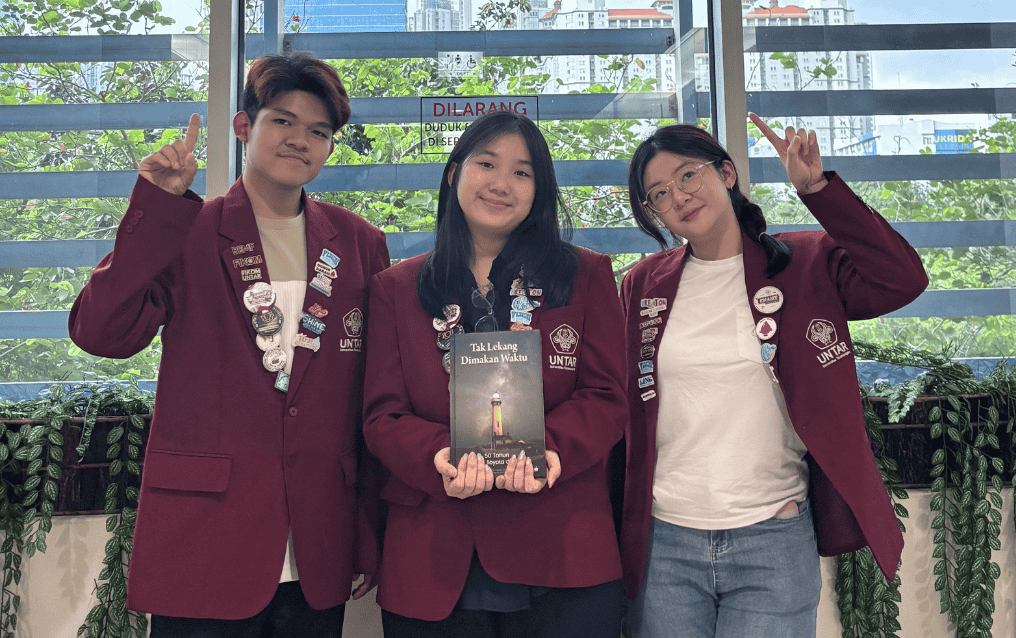
The event was also attended by students from the Faculty of Communication Science, Universitas Tarumanagara (Fikom Untar), who participated as attendees. Their participation formed part of an effort to broaden academic perspectives and deepen understanding of the role of industry and social foundations in the development of national education.
“Through this book discussion, we gained a broader perspective on the importance of collaboration between industry and education. The values promoted by the Toyota Astra Foundation are highly relevant to the challenges faced by today’s younger generation, particularly in character building and work ethic,” said Felicia Devinda, a 2024 cohort student of Fikom Untar.
The event opened with a special performance by the University of Indonesia (UI) Choir, which presented Hymne Guru and Ibu Pertiwi, creating a solemn atmosphere while underscoring the vital role of education in national development.
The book discussion session was moderated by senior Kompas journalist Tonny D. Widiastono and featured speakers from diverse educational and social backgrounds, including Professor of Sociology at the University of Indonesia Francisia Saveria Sika Ery Seda, Director of the Strada Association Rm. Odemus Bei Witono SJ, and Principal of SMK Negeri 2 Salatiga, Sriyanto. The discussion explored the relevance of the values upheld by the Toyota Astra Foundation in addressing current educational challenges and character development among the younger generation.
The session also addressed Toyota’s best practices through the implementation of the 5R methodology (Ringkas, Rapi, Resik, Rawat, Rajin), which has been introduced to vocational high schools. The application of the 5R principles in educational environments is expected to foster the mindset, character, and work attitudes required by industry, thereby improving the employability of vocational school graduates.
Vice President Director of PT Toyota Astra Motor, Henry Tanoto, expressed his hope that the book published by Kompas Book Publisher would serve as a medium for collective reflection. “We hope this book will not only document the 50-year journey of the Toyota Astra Foundation, but also serve as a reminder of our ongoing commitment to contributing, particularly in the development of education and the character building of Indonesia’s younger generation,” he stated.
Through this book discussion, the Toyota Astra Foundation reaffirmed its commitment to playing an active role in developing superior human resources ready to face future challenges, in line with the nation’s aspiration toward Golden Indonesia 2045. (FD/LI)