
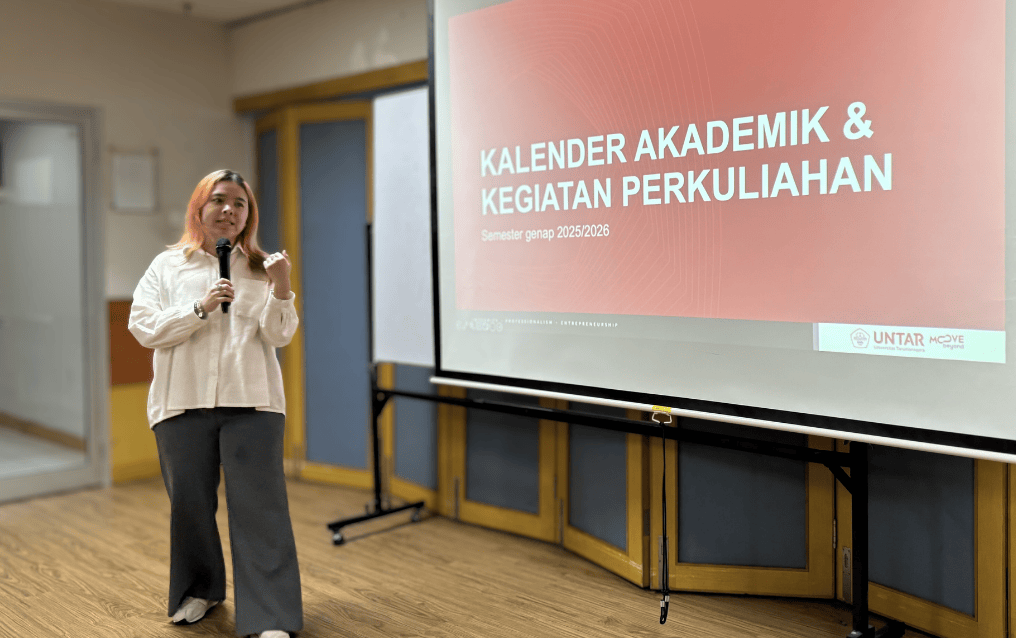
Jakarta, February 11, 2026 – The Undergraduate Communication Science Program of the Faculty of Communication at Tarumanagara University (Fikom Untar) held a Coordination Meeting for the Even Semester of the 2025/2026 Academic Year on Wednesday, February 11, 2026. The meeting aimed to align the direction of teaching and learning activities, evaluate the implementation of the previous semester, and prepare academic activities for the current semester.
The meeting was opened with welcoming remarks from the Dean of Fikom Untar, Dr. Sinta Paramita, S.I.P., M.A. In her remarks, she emphasized the importance of collaboration and maintaining the consistency of academic quality amid the rapidly evolving field of communication.
“Academic coordination such as this is an important moment to ensure that the learning process remains aligned with the program’s vision and the needs of the industry. I hope all lecturers will continue to innovate in their teaching methods and strengthen students’ academic quality,” said Dr. Sinta Paramita.
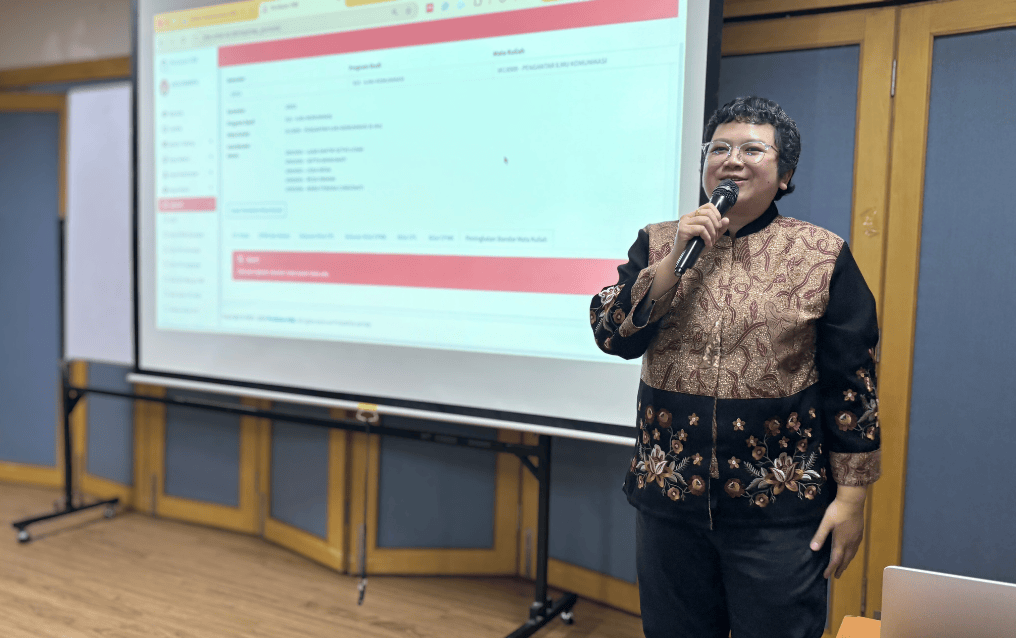
The meeting was then led by the Head of the Undergraduate Communication Science Program, Dr. Wulan Purnama Sari, S.I.Kom., M.Si. During the session, various strategic aspects related to the implementation of lectures were discussed. The agenda included reaffirming the vision and mission of the Communication Science Program, evaluating the teaching and learning process in the Odd Semester of 2025/2026, and presenting the academic calendar along with planned academic activities for the even semester. In addition, the meeting also discussed the list of courses to be offered and the appointment of course coordinators to ensure effective academic coordination.
The session was conducted interactively, with discussions and input from lecturers, which are expected to serve as a foundation for improving and developing the learning process in the even semester. Through structured coordination, the Undergraduate Communication Science Program of Fikom Untar remains committed to maintaining educational quality and ensuring that the curriculum stays relevant to developments in the communication industry. (LI)