
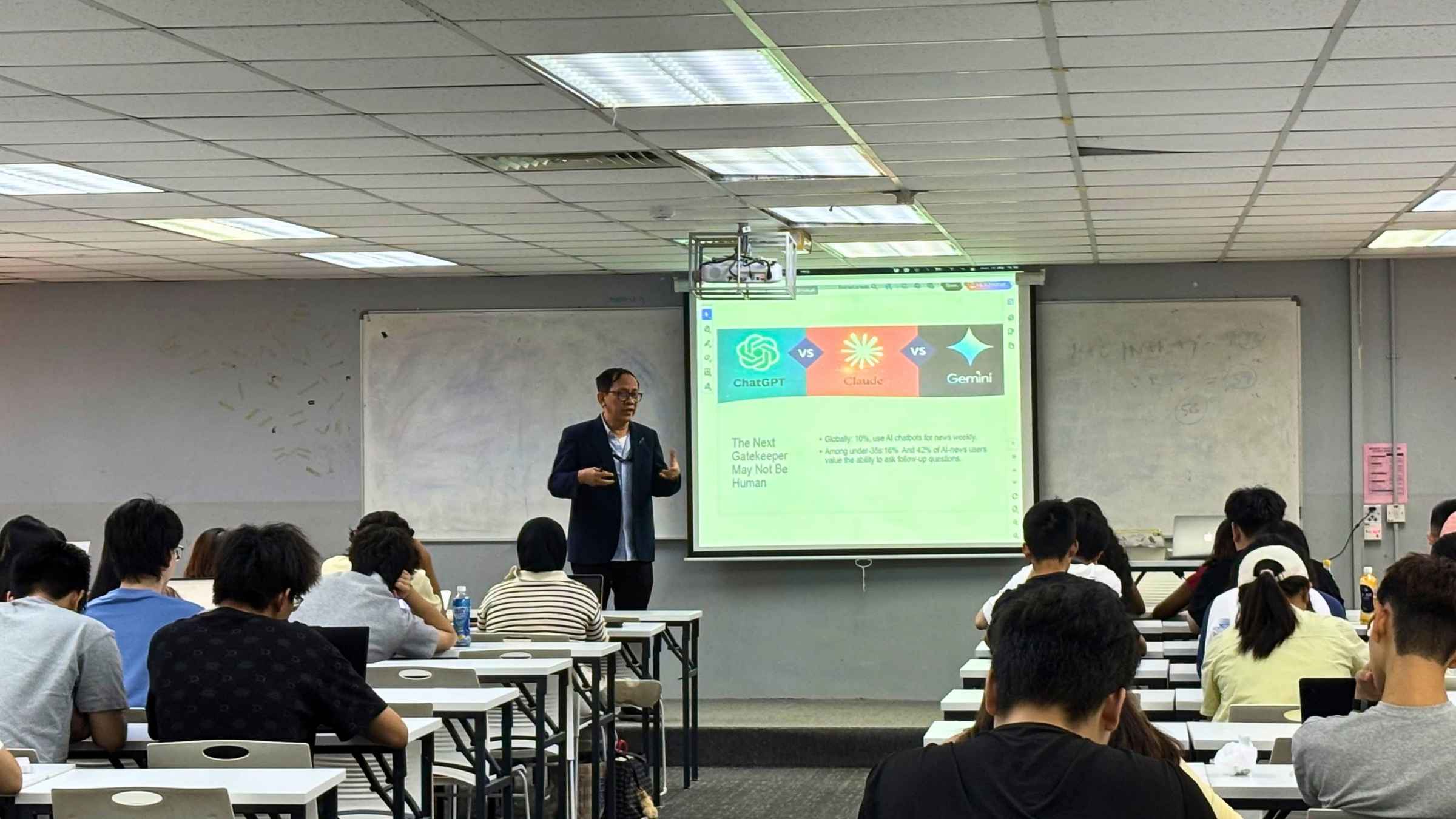
Malaysia, September 14, 2026 – Dr. Ahmad “Alex” Junaidi, a lecturer at the Faculty of Communication Sciences, Universitas Tarumanagara (Fikom Untar), served as a visiting lecturer at INTI International University, Malaysia, on Monday (September 14, 2026). The session was part of a one-week student mobility program attended by 17 Fikom Untar students in Malaysia.
On the first day of the program, Alex delivered a lecture titled “Who Is a Journalist Now? Journalism in the Age of AI.” The lecture explored changes in the news ecosystem, the development of artificial intelligence (AI), and the challenges facing the journalism profession in the future.
In his presentation, Alex explained that the news ecosystem has undergone fundamental changes. In the past, information generally moved in a relatively linear process from sources to journalists, editors, news organizations, and audiences. Today, the process involves a wider range of actors and technologies, including digital platforms, citizens, influencers, politicians, journalists, algorithms, and AI.
“Journalists are no longer the only parties capable of producing and distributing information to the public. The question is no longer simply who can be called a journalist, but what makes information a journalistic product,” Alex said.
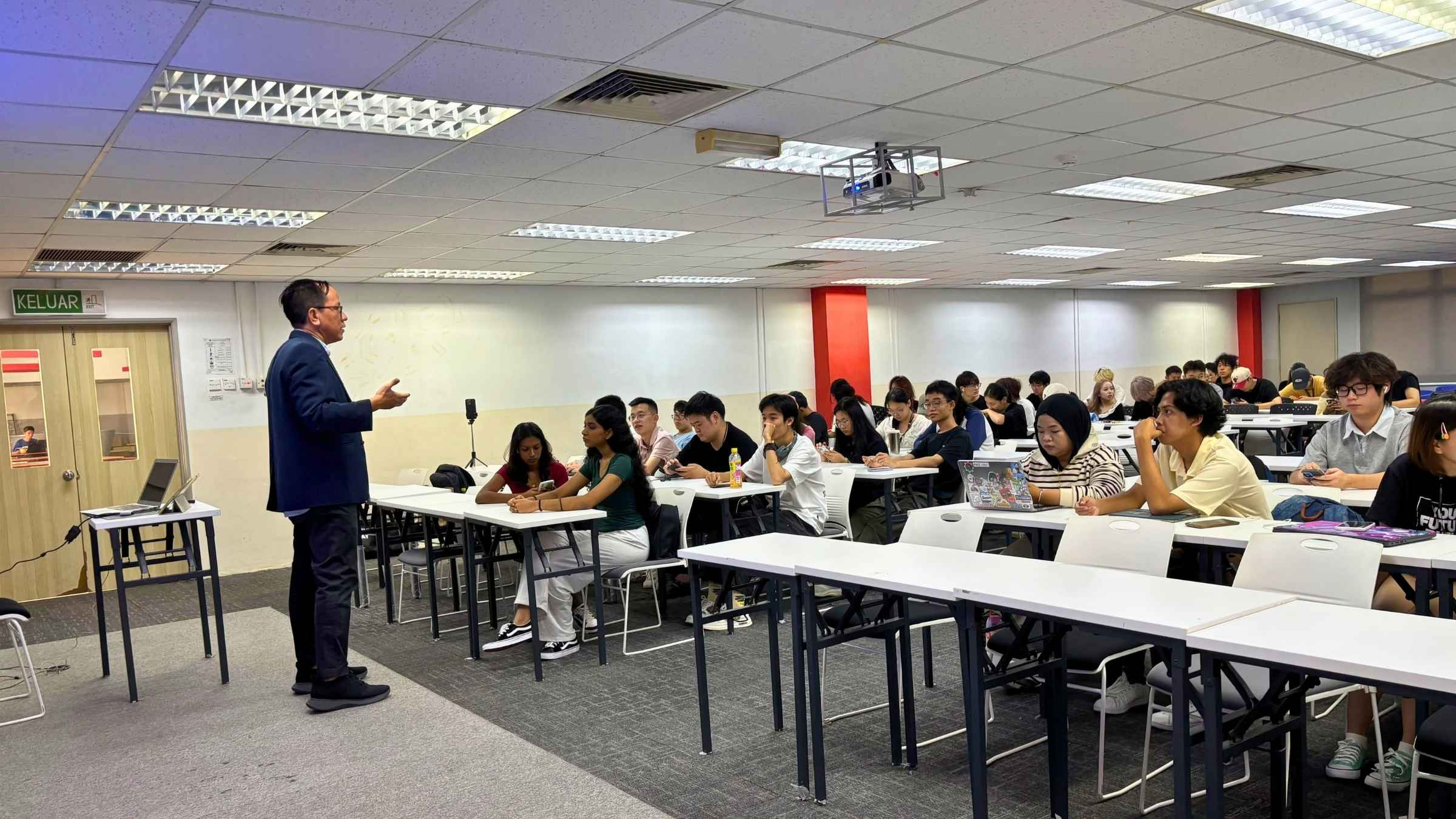
He also highlighted the shift in news consumption from conventional media and news websites toward social media and video platforms. This transformation can be seen in both Malaysia and Indonesia.
Citing the Reuters Institute Digital News Report 2026 as one of the references for his presentation, Alex noted that trust in news stood at 30 percent in Malaysia and 32 percent in Indonesia. Meanwhile, the proportion of people paying for online news reached 18 percent in Malaysia and 17 percent in Indonesia.
In Malaysia, the use of print media as a news source declined from 45 percent in 2017 to 14 percent in 2026. Television use also decreased, from around 54 percent a decade ago to 36 percent. In Indonesia, meanwhile, 64 percent of respondents accessed news through social platforms, including WhatsApp, YouTube, Facebook, and TikTok.
These changes in the media ecosystem have also brought new players into the production and distribution of information. Around one-third of Malaysians access news content from influencers and content creators who focus on news. In Indonesia, the development of digital media has also been marked by the emergence of what is known as “homeless media”—media outlets that primarily grow and distribute their content through digital platforms.
Alex explained that AI is increasingly influencing how people search for and consume news. Globally, 10 percent of respondents use AI chatbots to access news on a weekly basis. The figure rises to 16 percent among people under the age of 35. Meanwhile, 42 percent of AI users for news value the technology’s ability to answer follow-up questions.
Nevertheless, the development of AI does not eliminate the need for journalists. AI offers advantages in speed, data processing, summarization, and routine tasks. At the same time, humans continue to play an important role in journalistic judgment, interviewing, and empathy.
According to Alex, a former journalist, the biggest challenge for communication students and aspiring journalists is not simply learning how to use new technology, but maintaining the fundamental values of journalism amid technological change.
“Journalism may change, but its purpose should not. Journalism must continue to offer something that is increasingly scarce amid the flood of information: verified information, context, accountability, and public interest,” he said.
This message served as a key point in the final part of his lecture to the students of INTI International University.
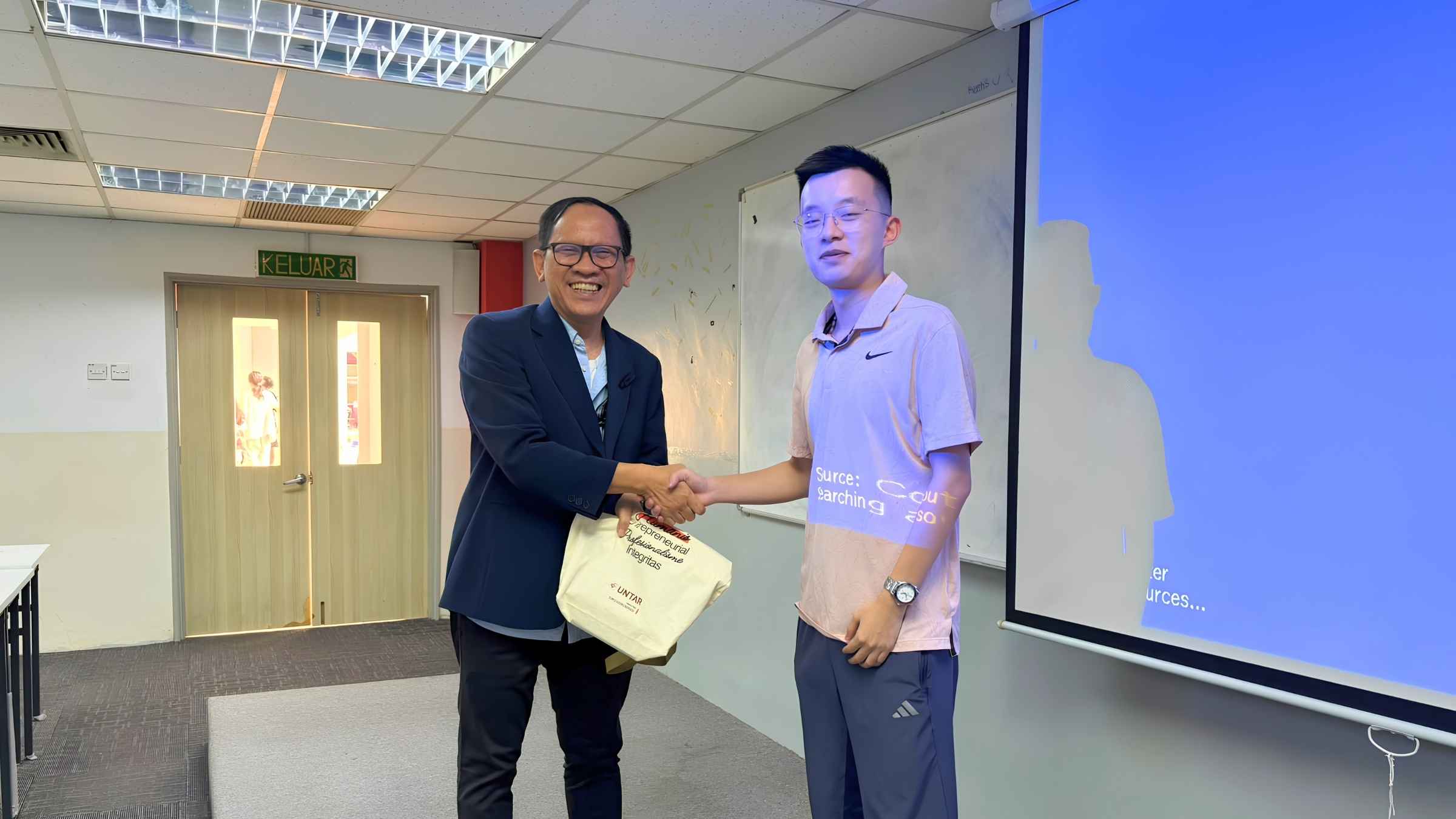
In addition to serving as a visiting lecturer, Alex is accompanying 17 Fikom Untar students participating in the one-week student mobility program at INTI International University. The students will take part in a series of academic activities and engage with an international learning environment as part of efforts to broaden their academic experiences and build cross-border networks.
The program is expected to provide students not only with international academic experience, but also with broader insights into the development of the communication and media industries in the region, particularly the transformation of journalism amid the rapid growth of digital platforms and AI. (AJ/FD)