
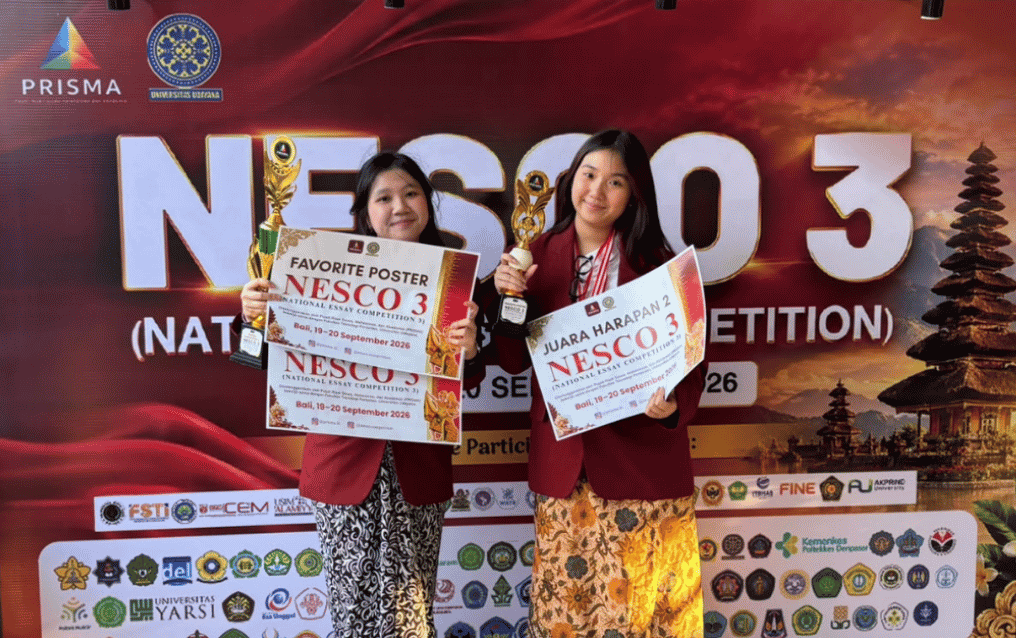
Bali, September 19–20, 2026 — Two students from the Faculty of Communication Sciences at Universitas Tarumanagara (Fikom Untar), Kayla Giovanna and Vanesa, have brought recognition to their university by achieving three awards at the National Competition Essay, organized by PRISMA in collaboration with the Faculty of Agriculture, Universitas Udayana, in Bali.
In the competition, Kayla and Vanesa selected the Tourism and Culture subtheme from the competition’s nine available subthemes. They developed an innovative concept centered on Barong dance, combining experiential tourism with cultural education. Their idea was inspired by concerns over cultural commodification, which can reduce traditional art forms to mere entertainment without fostering a deeper understanding of their underlying values and meanings.
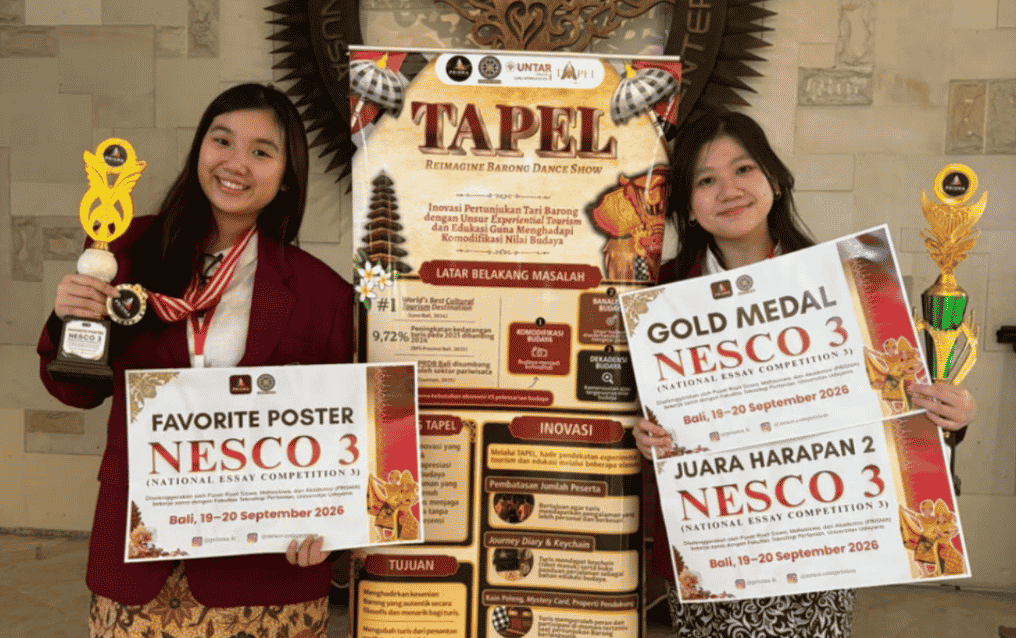 Through their innovation called TAPEL, Kayla and Vanesa proposed an approach that allows tourists not only to watch a Barong performance but also to gain a deeper understanding of its philosophy, cultural values, and meaning. By incorporating experiential and educational elements, the approach is intended to contribute to the preservation of Barong culture while strengthening public understanding of the cultural identity and values associated with the tradition.
The idea earned Kayla and Vanesa three achievements in the competition:
- Gold Medal – Cultural Tourism Category
- Favorite Poster – Cultural Tourism Category
- 2nd Runner-Up Overall – Competing across all competition subthemes
The overall achievement was earned after Kayla and Vanesa competed against participants from all nine other subthemes. The competition brought together 446 finalists from 19 provinces across Indonesia.
For Kayla and Vanesa, the achievements represent more than competitive accomplishments. The competition also provided an opportunity to communicate their ideas on how cultural heritage can remain alive, relevant, and understood amid the development of tourism and the changing times.
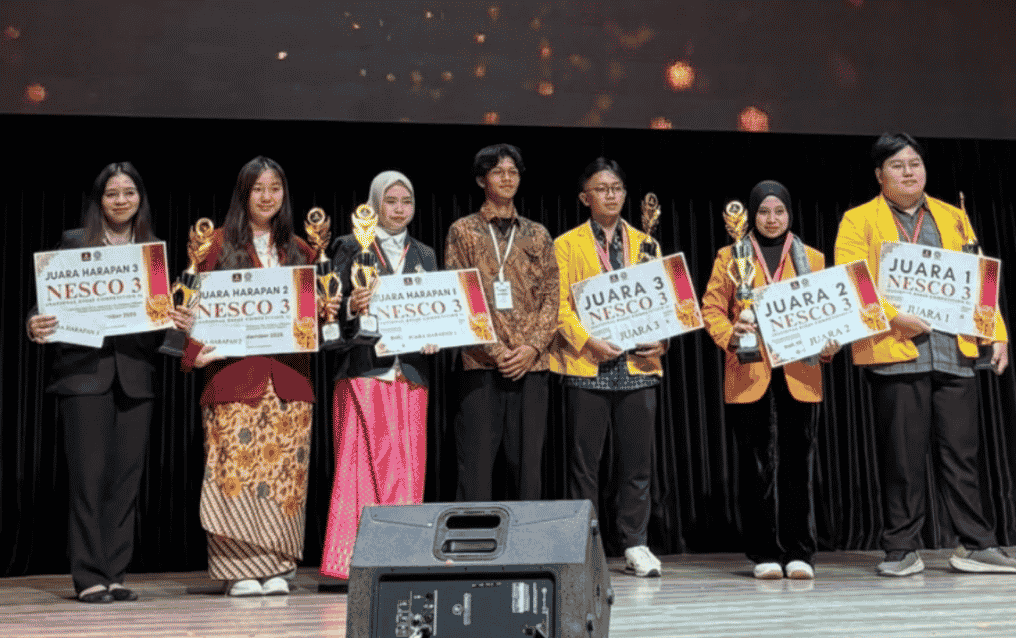 This perspective aligns with the message delivered by the Dean of the Faculty of Agriculture at Universitas Udayana, I Putu Sudiarta, S.P., M.Si., Ph.D. In his remarks, he emphasized the importance of an innovative younger generation in responding to rapid changes and developing solutions for society.
“Society today lives amid rapid changes across various sectors, requiring solutions that can respond to people’s needs quickly while remaining sustainable,” he said.
The achievements of Kayla and Vanesa demonstrate how students can contribute creative ideas to address challenges in cultural preservation amid the growth of the tourism industry. By combining communication, education, tourism experiences, and cultural values, their innovation offers an approach to keeping traditional culture relevant and helping contemporary generations better understand its meaning and significance. (KG)