
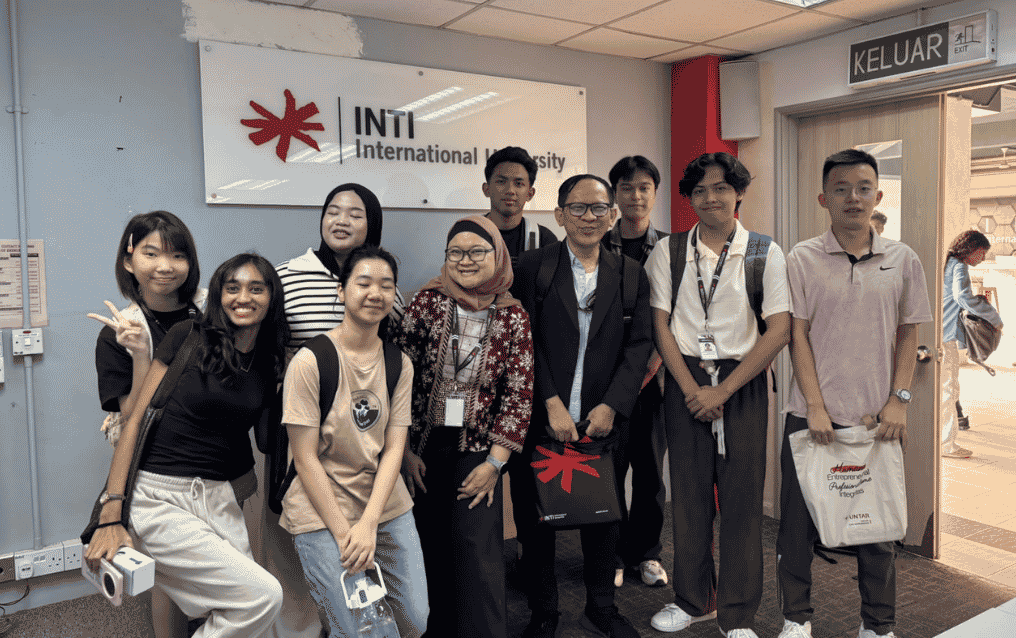
Negeri Sembilan, September 14, 2026 – The development of digital technology has introduced new ways for people to discover, understand, and experience culture. Through social media, video-sharing platforms, and virtual experiences, cultural heritage can now reach wider audiences beyond the boundaries of physical spaces. This phenomenon was explored during the Guest Lecture Session for Student Mobility held by the Faculty of Communication Sciences of Universitas Tarumanagara (Fikom Untar) and INTI International University, Malaysia, under the theme “Indonesia Cultural Heritage Goes Digital: Preserving, Promoting, and Experiencing Culture Through Technology.”
Held at INTI International University in Negeri Sembilan, Malaysia, the session provided insights into the relationship between culture, communication, and digital technology. Through the session, students gained a deeper understanding of how digital media can be utilized to introduce Indonesia’s rich cultural heritage to global audiences while shaping perceptions of cultural identity amid technological development.
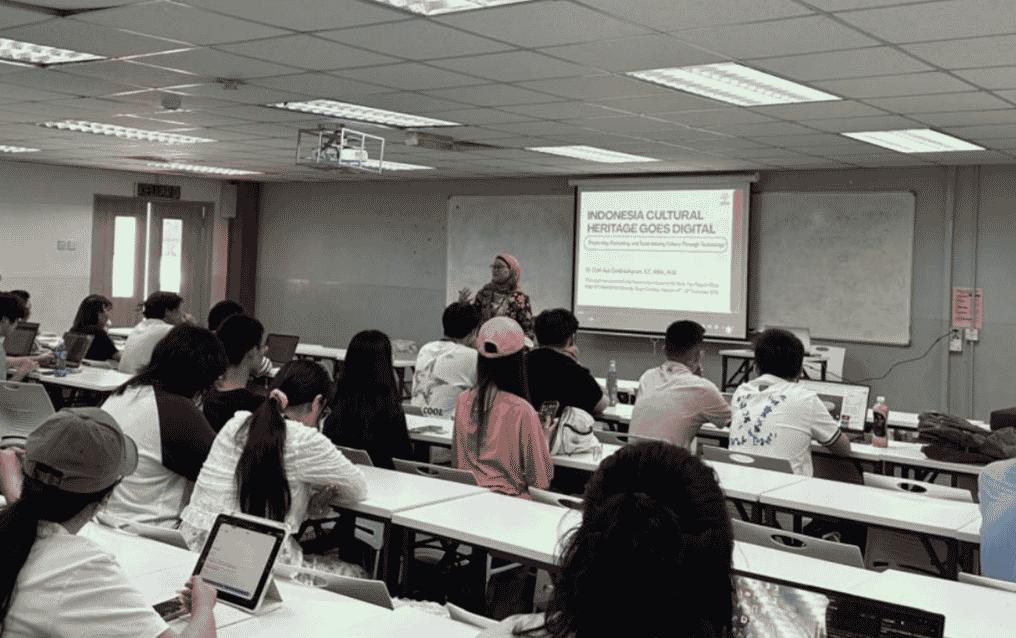 Fikom Untar lecturer and accompanying faculty member for the Student Mobility program, Dr. Diah Ayu Candraningrum, S.T., MBA., M.Si., explained that culture is not merely a legacy of the past, but also an evolving social process shaped through communication. Indonesia’s diverse cultural heritage, including traditions, rituals, arts, local knowledge, architecture, and community practices, has significant potential to be communicated more broadly through digital technology.
“Digital technology does not replace culture. Instead, it creates new spaces where culture can survive, develop, and communicate globally,” said Dr. Diah, who is also known as Sandra.
According to Dr. Diah, digitalization has also transformed the way people experience culture. While cultural experiences were previously obtained primarily through direct visits to tourist destinations, festivals, or interactions with local communities, the process can now begin through digital media. Instagram, TikTok, and YouTube provide spaces where audiences can discover cultural heritage, develop perceptions of a destination, and form expectations before experiencing it firsthand.
The representation of culture in digital spaces plays an important role in shaping how the public understands cultural identity and values. In this context, authenticity is also an important consideration, as cultural preservation is not only about maintaining traditions, but also involves local communities, cultural values, the sustainability of cultural practices, and visitor experiences.
The discussion on authenticity highlighted that the digitalization of culture is a process involving multiple stakeholders. Local communities, tourism destination managers, influencers, and tourists all contribute to how culture is represented and interpreted in digital spaces. Therefore, the use of technology should not be viewed solely as a promotional strategy, but also as a communication process that can influence cultural identity and public perceptions of cultural heritage.
During the session, students were also introduced to several studies on cultural communication in digital spaces, including research on cyberculture and travel influencers on Instagram. Influencers do not only serve as destination promoters, but can also act as cultural mediators who help shape public perceptions of a particular place. In addition, studies on digital tourism communication demonstrate how social media can be utilized for destination branding, cultural storytelling, audience engagement, and the development of digital identity.
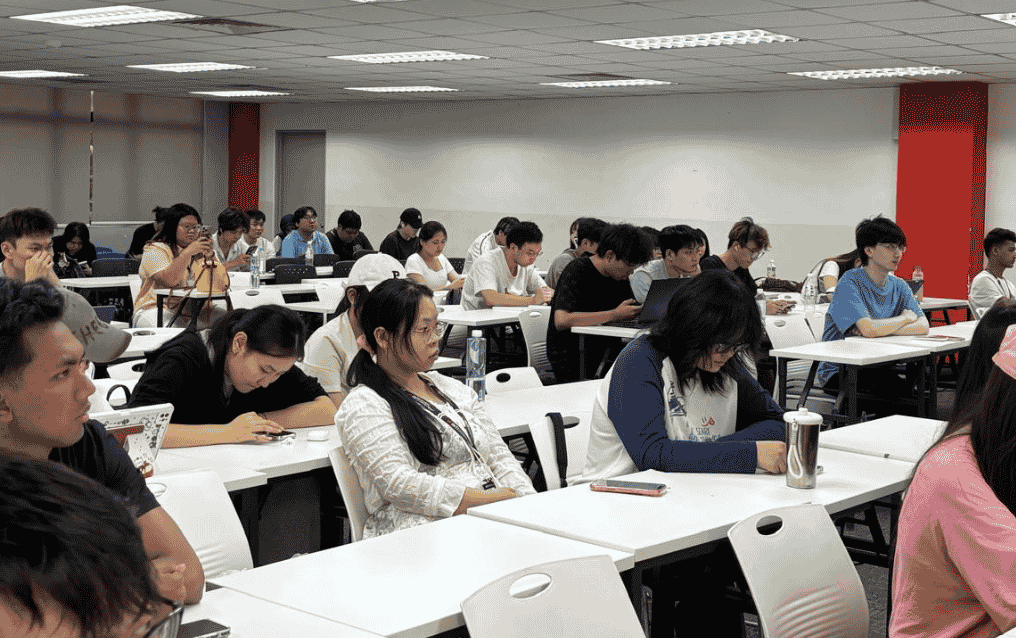 At the end of the session, students were encouraged to explore emerging communication research opportunities alongside technological developments. Potential areas include the role of TikTok in shaping cultural identity among young people, influencers as cultural ambassadors, the use of artificial intelligence in cultural storytelling, digital branding strategies for tourism villages, and the utilization of digital media to support cultural heritage preservation.
The Guest Lecture Session for Student Mobility also formed part of Fikom Untar’s efforts to strengthen international academic exchange and broaden students’ perspectives on cultural communication in the digital era. Through continuously evolving forms of communication, Indonesia’s cultural heritage can not only be preserved, but also introduced, experienced, and given new meaning by global audiences. (KG)